How to Choose a Snowboard
Types of Snowboards
Snowboards come in various shapes and designs to match different riding styles. Here are the main types:
All Mountain Snowboards: Versatile boards suitable for any terrain—groomed runs, powder, and even the park. Great for beginners and riders who want one board that can handle a little bit of everything.
Freestyle / Park Snowboards: Lightweight and flexible, these boards are perfect for tricks, jumps, rails, and park features. Ideal for riders who love playfulness, creativity, and riding switch.
Freeride Snowboards: Designed for off-piste adventures, steeper terrain, and more aggressive riding. Freeride boards often have a stiffer flex for better control and stability at speed.
Powder Snowboards: Wider and shaped to help you float on deep snow. These boards are made for powder days, tree runs, and surfy turns.
Splitboards: Backcountry boards that split into two skis for uphill travel and reconnect for the ride down. Splitboarding requires additional gear like climbing skins, poles, avalanche safety equipment, and touring-specific bindings.
Choosing the Right Snowboard Length
Your snowboard length depends on your height, weight, ability level, and riding style. A general rule is that when the board is stood on its tail, the nose should reach somewhere between your chin and nose. For more precise sizing, use your weight first, then adjust based on how and where you ride.
Check out our snowboard size guide for more sizing help.
Snowboard Length by Height and Weight
Use this table as a starting point, then adjust based on riding style: subtract 2–4 cm for park/freestyle, or add 2–4 cm for powder or freeride. Heights are listed in both ft/in and cm.
| Height | <130 lbs / 59 kg | 130–180 lbs / 59–82 kg | >180 lbs / 82 kg |
|---|---|---|---|
| 5’0" / 152 cm | 138–144 cm | 142–148 cm | 146–152 cm |
| 5’4" / 163 cm | 144–150 cm | 148–154 cm | 152–158 cm |
| 5’8" / 173 cm | 150–156 cm | 154–160 cm | 158–164 cm |
| 6’0" / 183 cm | 156–162 cm | 160–166 cm | 164–170 cm |
All lengths are in centimeters.
Camber vs. Rocker: Understanding Board Profiles
The shape of a snowboard’s profile affects how it turns, floats, grips, and pops.
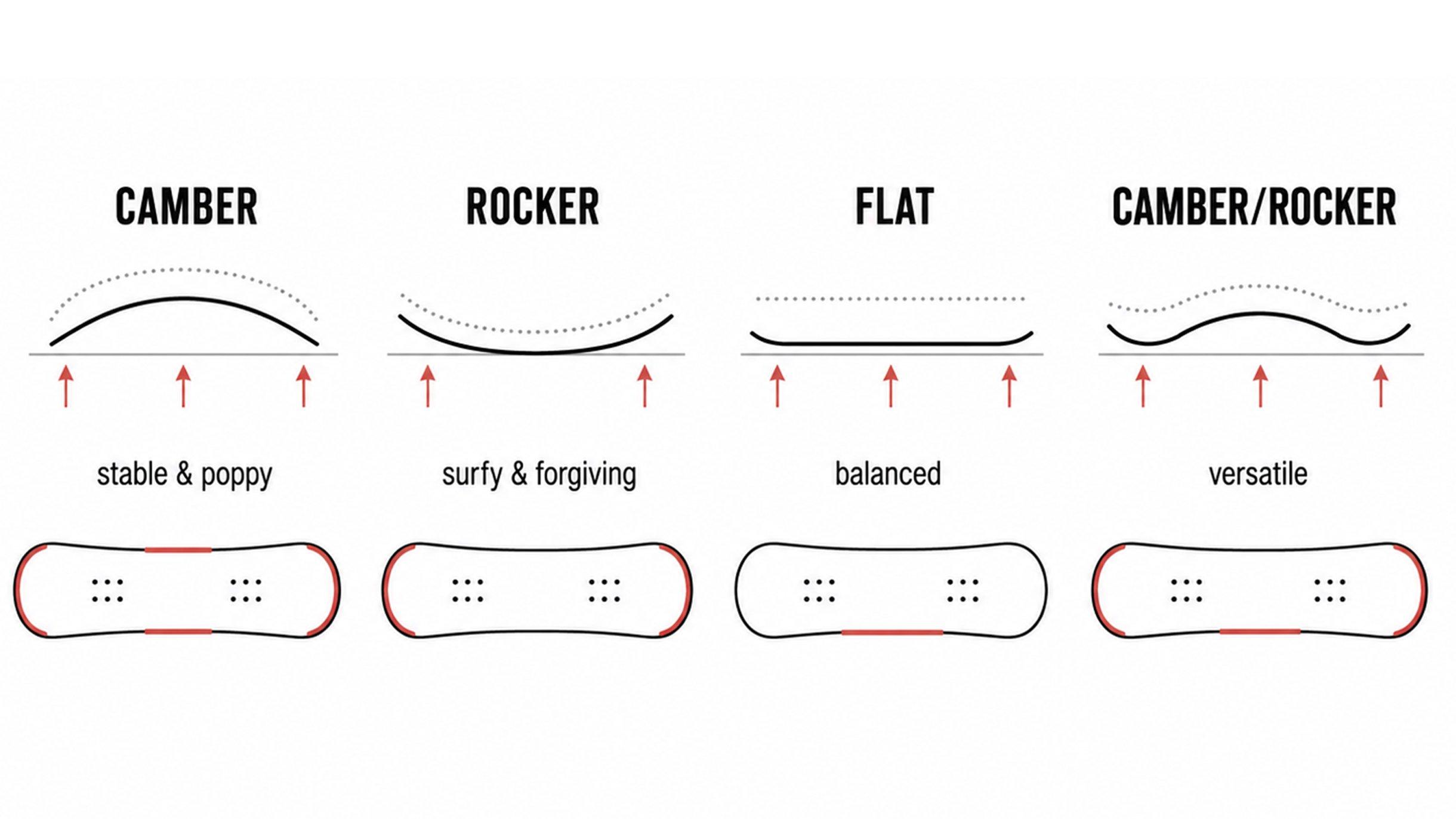
Camber: A traditional profile with a slight upward curve in the middle. Camber offers stability, pop, and strong edge hold, making it great for carving and high-speed riding.
Rocker / Reverse Camber: The middle of the board is lifted, with the tips and tail closer to the snow. Rocker creates a surfy feel, makes turning easier, and helps with float in powder.
Flat: A flatter profile with a stable, forgiving feel. Flat profiles can be a good option for beginners, park riders, and riders who want predictable edge-to-edge control.
Camber/Rocker: A combination profile that blends camber underfoot with rocker near the tips. This gives riders a balance of edge hold, float, and versatility across changing conditions.
Snowboard Width: Why It Matters
Choosing the right snowboard width is key to getting a smooth, responsive ride. It all comes down to how your boots sit on the board.
Here’s the goal: You want your snowboard boots to hang over the edges of the board just a little—about 1 to 2 centimeters on each side. This gives you the leverage you need to turn easily.
Too wide? Your boots won’t reach over the edges enough, which can make edge-to-edge transitions feel sluggish.
Too narrow? Your toes and heels might drag in the snow during turns, which can throw off your balance or cause a wipeout.
Snowboard Width Sizing Chart
Don’t know your US boot size? Measure your foot length in centimeters and use the Foot Length column to find your row. You want the waist width that lines up with your boot size to help keep boot overhang in the ideal 1–2 cm range on each side.
| Waist Width (mm) | Foot Length (cm) | Men’s Boot Size (US) | Women’s Boot Size (US) |
|---|---|---|---|
| 235–245 mm | 22.5–24.5 | 6.0–8.0 | 7.5–9.5 |
| 245–255 mm | 24.5–26.0 | 8.0–9.5 | 9.5–11 |
| 255–260 mm | 26.0–27.0 | 10–11.5 | 11.5+ |
| 260–265 mm+ | 27.0+ | 11.5+ | 13+ |
Snowboard Shapes: Pick Your Style
Different shapes are designed for different riding styles. Here’s what to look for:
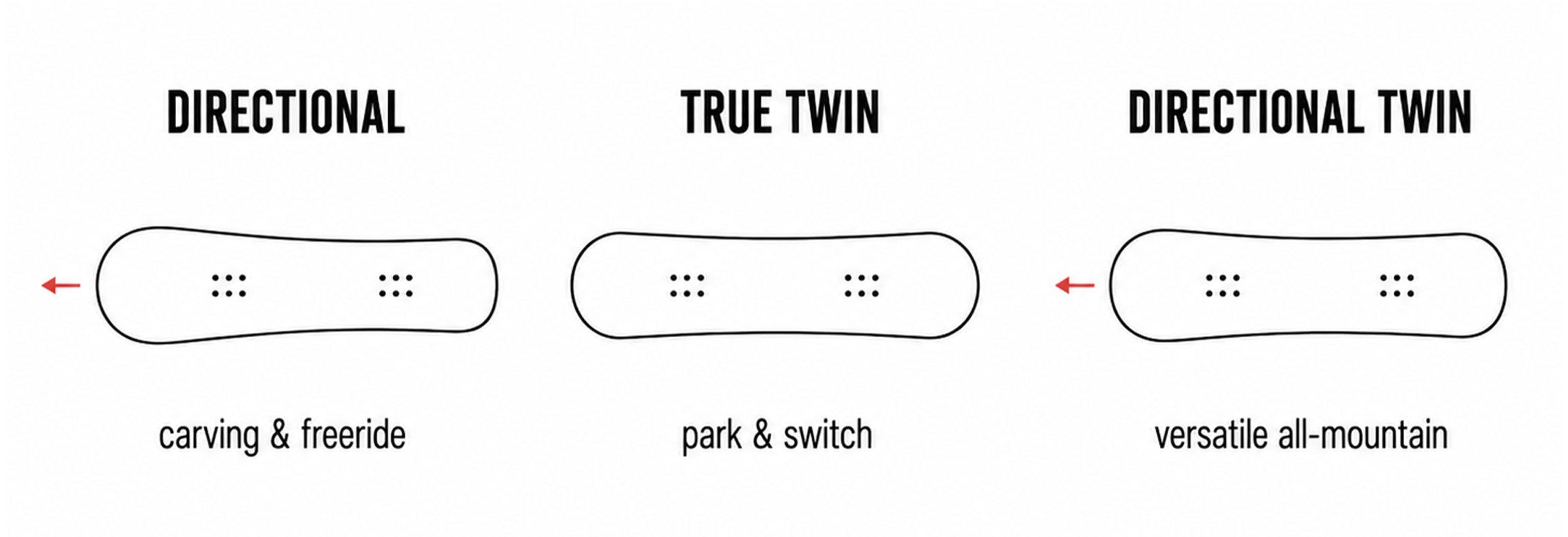
Directional Boards: Built to ride primarily one way. These are great for speed, carving, powder, and freeride terrain. You’ll find directional shapes in many freeride, powder, and some all-mountain setups.
True Twin Boards: Perfectly symmetrical. They ride the same whether you’re going forward or switch, making them ideal for park and freestyle riders.
Directional Twin Boards: A hybrid between directional and twin shapes. These are versatile and great for riders who want to explore all kinds of terrain, from groomers to jumps.
Extra Features That Affect How Your Board Rides
Sidecut Radius
The sidecut radius is the natural curve along the edge of your board. If you drew a giant circle that followed this curve, the size of that circle, measured in meters, would be the radius.
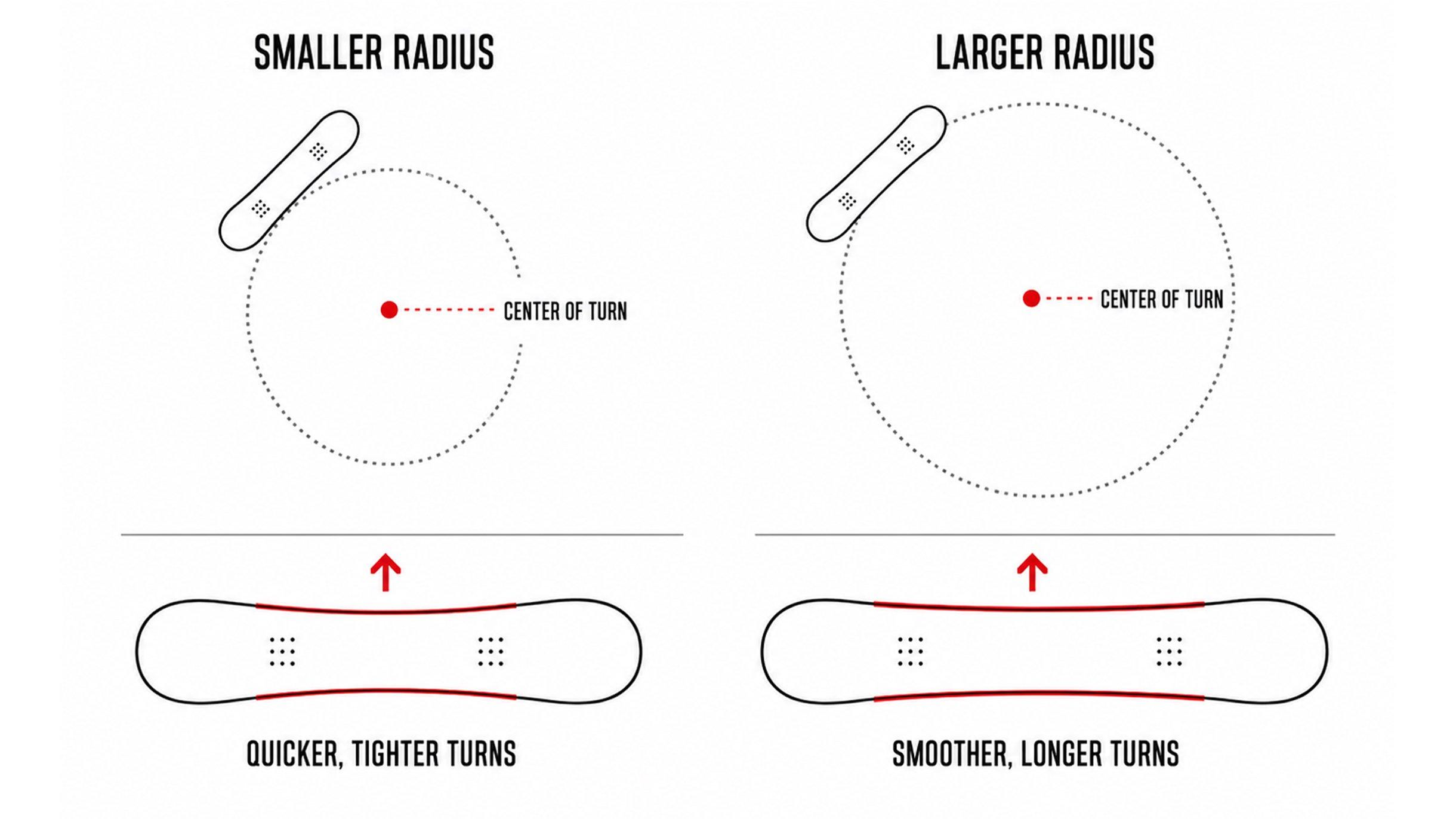
Smaller radius = tighter turns and more agility.
Larger radius = longer, sweeping turns and more stability at higher speeds.
In general, narrower-waisted boards have shorter sidecut radii, while wider boards have longer ones.
Effective Edge
The effective edge is the part of your board’s metal edge that actually touches the snow while you’re riding. It’s always a bit shorter than the total length of the board.
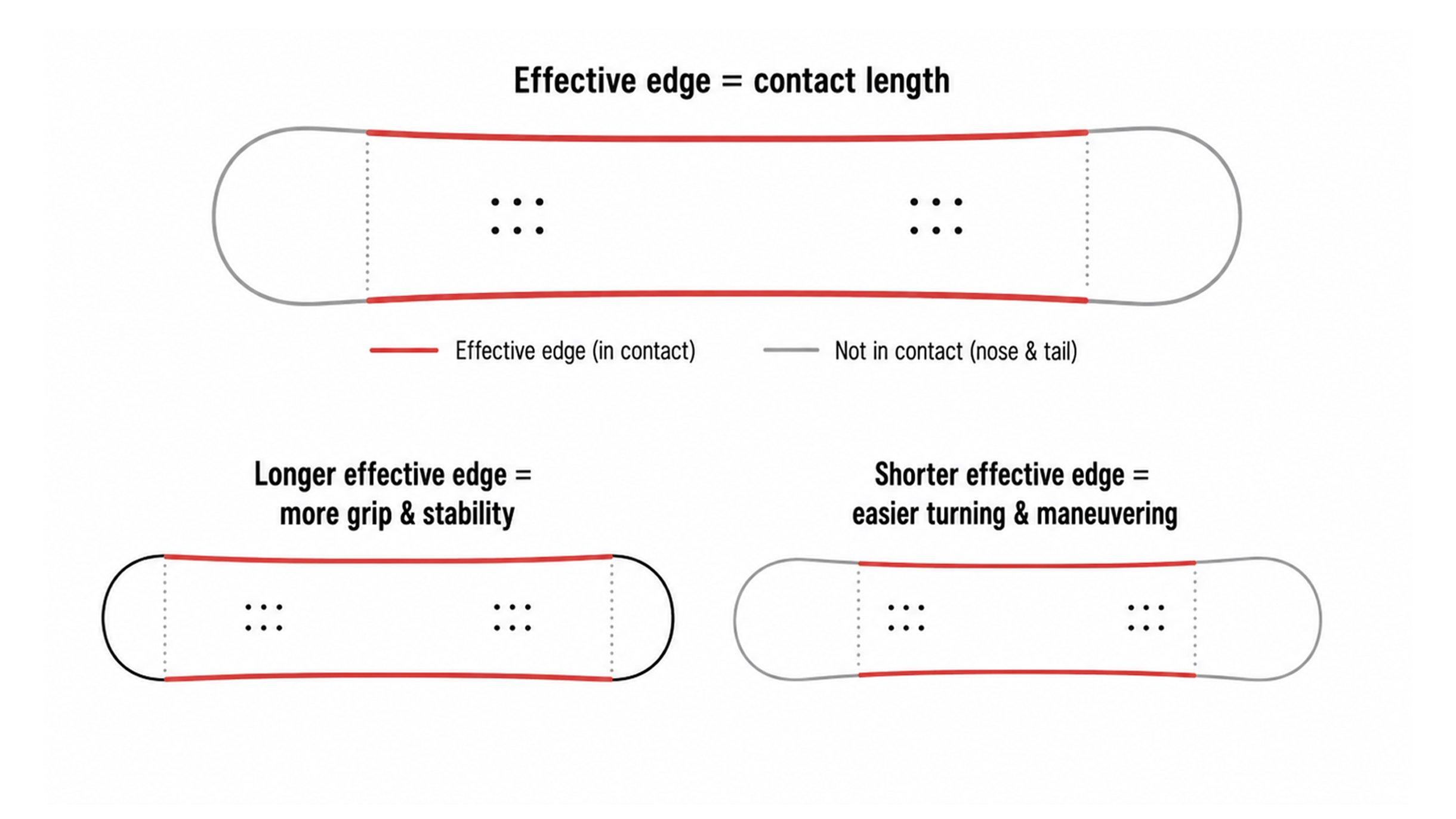
Longer effective edge = more grip and stability, especially at high speeds or on icy slopes.
Shorter effective edge = easier turning, spinning, and maneuvering—perfect for park riding or beginners.
Flex: Soft vs. Stiff
Snowboards flex in two ways:
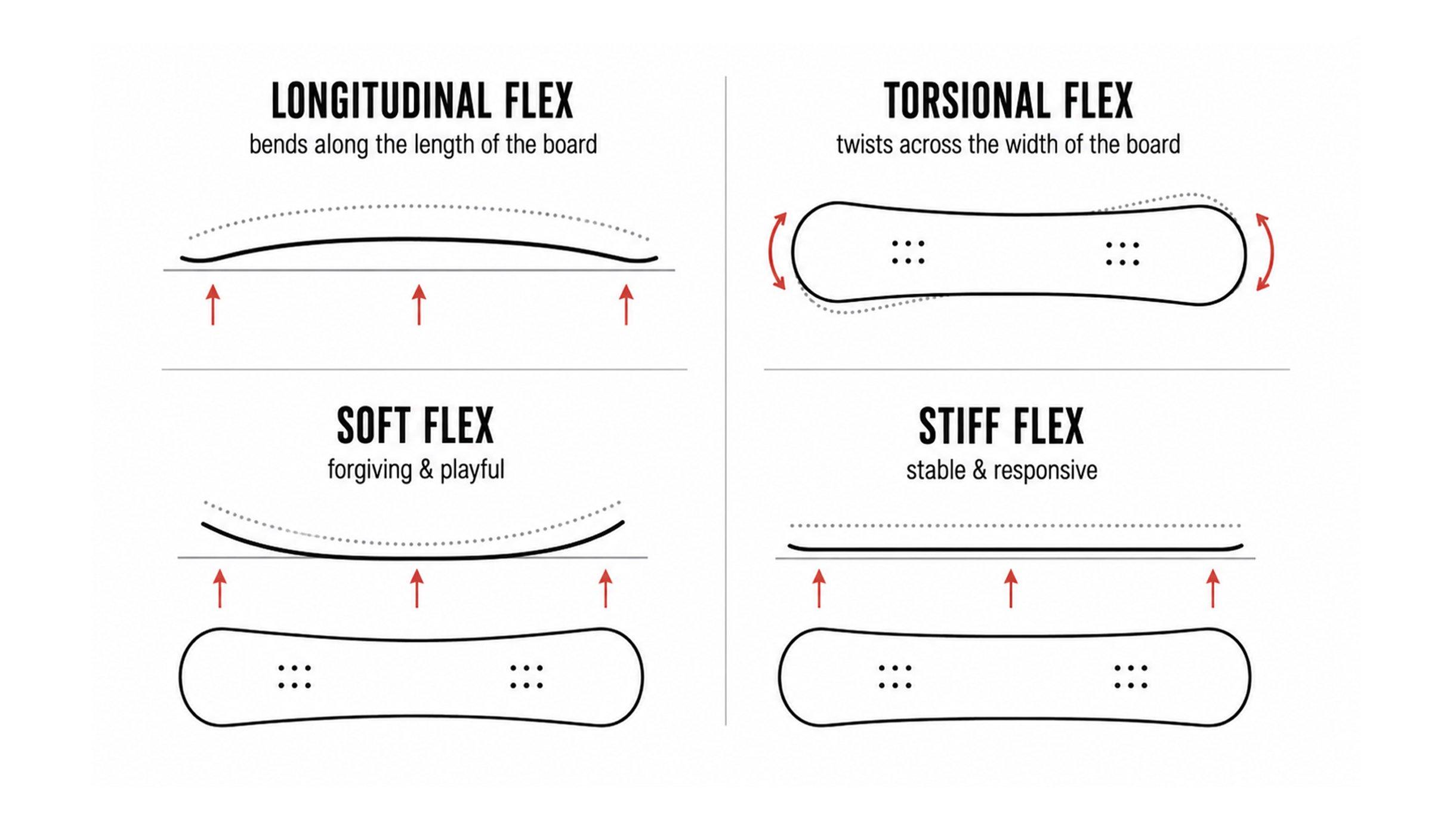
Longitudinal flex: How the board flexes along its length.
Torsional flex: How the board twists across its width.
Here’s how flex affects your ride:
Soft flex: More forgiving, easier to control, and better for beginners or freestyle riders. Softer boards turn easily and feel better at slower speeds.
Stiff flex: More edge hold, quicker response, and more stability through aggressive turns—ideal for advanced riders, freeride terrain, and high-speed riding.
Ready to find the board that suits your style? Whether you're learning, cruising groomers, chasing powder, or sending it off jumps, understanding these features will help you ride with more confidence and control.
Start with all RIDE snowboards, or narrow it down by all mountain snowboards, freestyle/park snowboards, or powder snowboards.
For more information, check out RIDE's tech pages: